
Satisfies 1 requirement
Gen2 Tags Passive RFID Tag for Animal Travking (EAO03)
US$1.05-1.50
1,000 Pieces(MOQ)

I have found results from10000+products and4000+suppliers aboutAnimal rfid tag




Selecting the correct frequency is critical for system compatibility. Low Frequency (LF, 134.2 kHz) is the international standard for livestock tracking (ISO 11784/11785) because it penetrates body tissue and water effectively. Ultra-High Frequency (UHF, 860-960 MHz) is preferred for long-range group reading (e.g., tracking a herd passing through a gate), but it is more sensitive to interference from the animal's body.
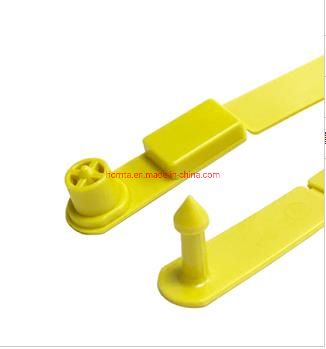
Animal tags must be made of medical-grade TPU (Thermoplastic Polyurethane), which is biocompatible, anti-allergic, and weather-resistant. Ensure the material has UV protection to prevent brittleness and a high-retention rate design to ensure the tag does not fall off during the animal's lifespan. The metal tip of the male tag should be anti-corrosive to prevent infections.
For global trade and livestock management, tags must adhere to ISO 11784 (code structure) and ISO 11785 (technical concept). If you are sourcing for pets, look for ICAR (International Committee for Animal Recording) certification, which ensures the manufacturer has a unique, unrepeatable identification code. For the US market, USDA-approved tags may be required for specific disease traceability programs.
Request IP67 or IP68 waterproof ratings to ensure the tag survives mud, rain, and cleaning. The read range should be tested with your specific reader; typically, LF ear tags should be readable from 20-30cm with a handheld reader, while UHF tags can reach 3-5 meters. Always ask for laser-engraved numbering rather than ink printing to ensure the ID remains legible for years.
Data duplication is a major risk. You should require the supplier to provide a chip ID list in Excel format before shipping and use a 'No Duplicate ID' guarantee clause in your contract. For large-scale government projects, verify if the supplier can handle encrypted chips to prevent unauthorized data tampering.
Focus on volume-based pricing tiers; since the cost of the RFID inlay drops significantly at scale, you can often negotiate a 10-15% discount for orders exceeding 50,000 units. Additionally, negotiate for free laser marking customization (logos/QR codes) and ask for 1-2% spare units to cover any potential DOA (Dead on Arrival) chips.
RFID tags are electronic components. Ensure the supplier provides a HS Code 852352 (Smart Cards) for accurate tariff calculation. Since these are small but high-value items, air express (DHL/FedEx) is usually the most cost-effective and secure method. Ensure the packaging includes anti-static shielding if shipping sensitive UHF inlays in bulk.
Prioritize Audited Suppliers on Made-in-China.com who have undergone on-site inspections by third-party agencies like SGS or Intertek. Check their export experience to your specific region to ensure they understand local agricultural department requirements and can provide the necessary Certificate of Origin to reduce import duties.