
Satisfies 1 requirement
1.5-Ton Heavy Load Capacity Tracked Hydraulic Garden Home Mini Site Small Dump Truck Mini Rubber Track Crawler Garden Electric Start Dumper
US$1,788.00
1 sets(MOQ)

I have found results from200000+products and50000+suppliers aboutCapacity dumper


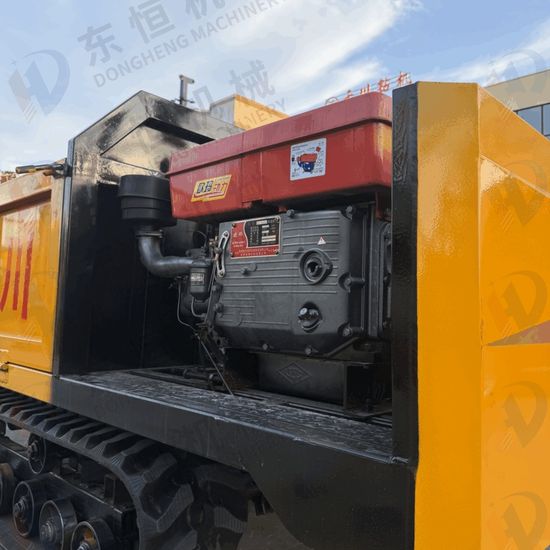


Selecting a capacity dumper requires matching the machine's power to your operational environment. Prioritize engine displacement and horsepower (e.g., 9HP to 15HP for mini dumpers) to ensure it can handle steep inclines. Check the rated load capacity, typically ranging from 500kg to 3000kg for compact units, and ensure the hydraulic tipping system uses high-quality cylinders for smooth unloading. For rough terrain, opt for crawler-tracked models which offer superior traction compared to wheeled versions.
For international trade, ensure the equipment carries the CE Marking for European markets or meets EPA/CARB standards for the United States to ensure engine emission compliance. Safety features are non-negotiable; verify the presence of ROPS (Roll-Over Protective Structure) and FOPS (Falling Object Protective Structure). Additionally, the machine should comply with ISO 5010 for steering capabilities and ISO 6011 for display and control symbols.
Focus on the thickness of the steel plate used in the cargo box; high-tensile steel (like Q345B) is preferred for impact resistance. Inspect the welding quality—robotic welding usually offers better consistency than manual. Ask the supplier for the brand of core components; using internationally recognized hydraulic valves and pumps (such as Rexroth or local premium brands) significantly reduces the failure rate and simplifies future maintenance.
Wheeled dumpers are ideal for landscaping and urban construction where speed and surface protection are important. Tracked (crawler) dumpers are essential for swampy, sandy, or mountainous terrain where low ground pressure is required. For indoor or tunnel work, consider electric-drive capacity dumpers to eliminate exhaust emissions and reduce noise pollution.
The biggest risks include non-compliance with local emission laws, which can lead to customs seizure, and shipping damage. To mitigate this, always request a Pre-Shipment Inspection (PSI) and ensure the machine is treated with anti-rust spray and securely fastened with steel wires and chocks inside the container.
Focus on the Total Cost of Ownership (TCO) rather than just the unit price. Negotiate for a spare parts kit (filters, seals, belts) to be included in the initial order. For bulk purchases, aim for a 10-15% discount or request an extended warranty period (e.g., 18 to 24 months) on the powertrain to ensure long-term security.
For 1-2 units, LCL (Less than Container Load) is possible but FCL (Full Container Load) is safer to prevent contact with other cargo. If the dumper is oversized, use Flat Rack containers or Ro-Ro (Roll-on/Roll-off) shipping. Always clarify the Incoterms; CIF (Cost, Insurance, and Freight) is convenient for beginners, but FOB (Free On Board) gives you more control over the shipping timeline and costs.
Utilize the secured payment services provided by Made-in-China.com to ensure funds are only released after proof of shipment. Avoid direct wire transfers to private accounts. Always verify the supplier's Audit Reports and check if they are a Diamond Member or a Gold Member with a verified manufacturing plant to avoid trading company markups.