
Satisfies 1 requirement
Manufacturer Price Flexible Chain&High Quality Assmebly Production Line
US$250.00-500.00
1 Meter(MOQ)

I have found results from200000+products and90000+suppliers aboutDetergent production line price


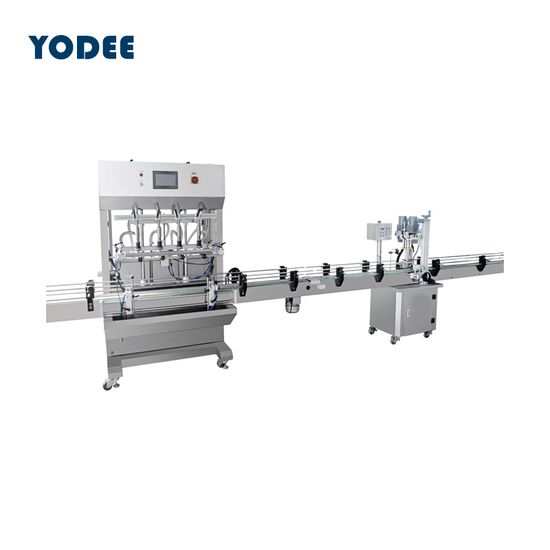


The price is primarily driven by the automation level (manual vs. semi-auto vs. fully automatic) and the production capacity (measured in kg/h or bottles/h). A standard line includes a water treatment system (RO reverse osmosis), stainless steel mixing tanks (SUS304 or SUS316L), high-shear emulsifiers, and filling/capping/labeling machines. High-end lines featuring PLC control systems (like Siemens or Delta) and servo-motor driven filling heads will command a higher price but offer superior precision and lower waste rates.
For liquid detergents, the mixing tanks must be made of corrosion-resistant SUS316L stainless steel to handle surfactants and pH adjusters, which is more expensive than SUS304. Furthermore, if you are producing for regulated markets, the equipment must meet GMP (Good Manufacturing Practice) standards and possess CE certification. Ensuring the supplier provides pressure vessel certificates for heating jackets is crucial for both safety compliance and long-term operational legality.
Buyers must evaluate the total power consumption (kW) and the need for industrial steam or electric heating. A complete line requires a stable compressed air supply for pneumatic components and a cooling water circulation system. It is economically feasible to choose a supplier who offers modular designs, allowing you to start with a basic mixing and filling setup and integrate automatic palletizing or shrink-wrapping modules as your business scales.
A well-maintained industrial detergent line has a service life of 10–15 years. Maintenance costs are generally 3-5% of the initial investment annually, covering wear parts like seals, gaskets, and filling nozzles. To minimize downtime, prioritize suppliers on Made-in-China.com who provide a one-year warranty and a vulnerable parts kit with the initial shipment.
Always check if the supplier is a 'Diamond Member' or 'Audited Supplier' on Made-in-China.com, as these statuses indicate third-party verification by firms like SGS or Bureau Veritas. Utilize Secured Trading Services to ensure that payment is only released to the supplier after you confirm the Bill of Lading or successful pre-shipment inspection.
Do not negotiate on the unit price alone; instead, focus on the Total Cost of Ownership (TCO). Negotiate for free installation supervision, operator training, and an extended spare parts package. For large production lines, a standard payment structure is 30% deposit, 60% after FAT (Factory Acceptance Test), and 10% after installation or upon arrival at the destination port.
Detergent lines are bulky and fragile. Ensure the contract specifies seaworthy vacuum packaging and reinforced wooden crates (IPPC standard) to prevent rust and mechanical damage during sea transit. For shipping to regions like Africa or South America, clarify the Incoterms (FOB vs. CIF); while CIF is convenient, FOB allows you to control the freight forwarder, which can be safer for handling oversized machinery.
If a physical visit is not possible, mandate a live video inspection where the supplier runs the machine using your specific formula. Request high-definition videos of the PLC interface, the filling accuracy test, and the emergency stop functions. Third-party inspection agencies can also be hired to provide a comprehensive pre-shipment inspection report to ensure the machine matches the agreed-upon specifications.