
Satisfies 1 requirement
Stainless Steel Welded Helical Extruded Spiral Fin/Finned Plate Heat Exchanger Tube
US$1,550.00
1 Ton(MOQ)

I have found results from5000+products and1000+suppliers aboutExtruded finned tube


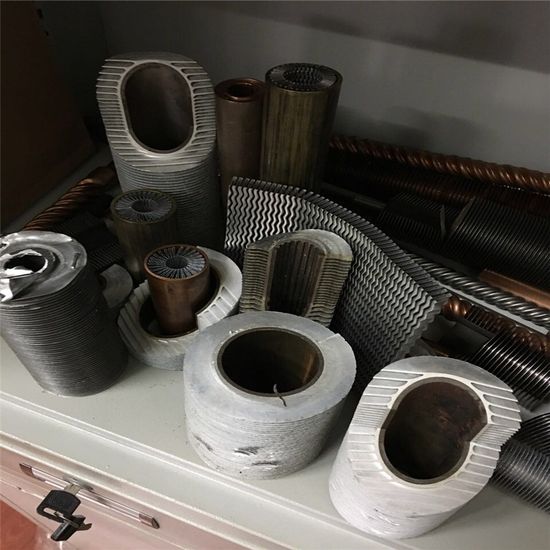


Buyers must prioritize the base tube material (typically carbon steel, stainless steel, or copper) and the fin material (usually aluminum). Key dimensions include the fin density (FPI - Fins Per Inch), fin height, and wall thickness of the base tube. For high-pressure applications, ensure the bond integrity between the fin and the tube is verified through thermal resistance testing to prevent performance degradation over time.
Products should adhere to ASTM (American Society for Testing and Materials) standards, specifically ASTM A213 or A106 for the base tubes. For pressure vessel components, ASME Section VIII compliance is often required. Ensure the manufacturer holds ISO 9001:2015 for quality management and provides Mill Test Certificates (MTC) according to EN 10204 3.1 to track material heat numbers and chemical composition.
The extrusion process provides a continuous bimetallic bond, which offers superior corrosion protection for the base tube as the aluminum muff completely covers it. This results in zero thermal contact resistance loss over thermal cycling, unlike L-foot or G-fin types. It is the ideal choice for air-cooled heat exchangers (ACHE) and radiators operating in harsh or humid environments.
These tubes are primarily used in petrochemical refineries, power plants, and HVAC systems. They are essential for heat recovery steam generators (HRSG) and oil coolers. Because of their easy-to-clean surface and mechanical strength, they are also preferred in food processing and textile drying industries where hygiene and durability are paramount.
Always mandate a Pre-Shipment Inspection (PSI) by a third-party agency like SGS or TÜV. Request a hydrostatic test report and a spectrometer analysis to verify the alloy grade. Using Made-in-China.com's Secured Trading services can provide an extra layer of payment protection, ensuring funds are only released upon confirmation of shipping documents.
Focus on the total weight of the aluminum and steel as these are commodity-priced. Negotiate based on the current LME (London Metal Exchange) aluminum prices. For MOQs, if your project is small, suggest a trial order of 50-100 meters but agree to a higher volume for future phases to secure bulk discounts of 10-15%.
Extruded fins are susceptible to mechanical bending. Insist on custom wooden crates with internal supports (saddles) to prevent tube sagging. Each tube layer should be separated by foam or plastic spacers. Ensure the supplier uses VCI (Volatile Corrosion Inhibitor) paper or film to prevent oxidation of the aluminum fins during the 30-45 day sea transit.
Verify the HS Code (typically 7304 or 8419 series) with your local customs broker to check for anti-dumping duties or specific tariffs on steel/aluminum products from China. Ensure the supplier provides a Certificate of Origin (CO) or Form E/Form F if your country has a Free Trade Agreement with China to reduce or exempt import duties.