
Satisfies 1 requirement
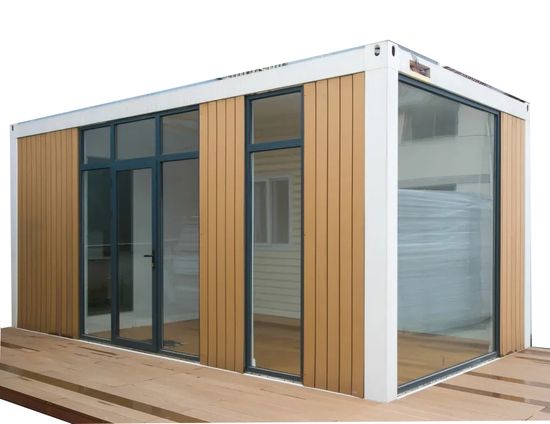
China Luxury Miniature Studio Metal Frame Prefabricated Floating Villa House
US$3,450.00-4,850.00
1 Piece(MOQ)

I have found results from40000+products and10000+suppliers aboutFloating house




The most critical component is the buoyancy system, typically constructed from marine-grade aluminum (5083 or 5052), high-density polyethylene (HDPE) pontoons, or fiber-reinforced concrete. For the superstructure, light-gauge steel framing is preferred due to its high strength-to-weight ratio and resistance to warping. Ensure all fasteners and hardware are 316 stainless steel to prevent corrosion in humid or saline environments.
Buyers must request hydrostatic stability reports and ensure the design complies with ISO 12217 (Small craft stability and buoyancy assessment). The house should feature a low center of gravity and a redundant compartment system in the hull to prevent sinking in case of a localized puncture. Additionally, verify that the mooring system (piles, chains, or Seaflex) is engineered to withstand local wind loads and wave heights.
For sustainable operation, prioritize houses equipped with integrated solar PV systems and lithium battery storage. Waste management is paramount; ensure the unit includes a marine sanitation device (MSD) or a black water holding tank that meets international discharge standards. For fresh water, look for reverse osmosis desalination units or high-capacity onboard filtration systems.
Depending on the destination, the product should adhere to CE marking (RCD - Recreational Craft Directive) for Europe or ABYC standards for North America. If the floating house is classified as a 'vessel,' it must have a Hull Identification Number (HIN). Always confirm that the electrical systems are dual-voltage compatible (110V/220V) and use marine-grade tinned copper wiring to prevent electrolysis.
The biggest risks involve structural damage during transit and non-compliance with local maritime or building codes. To mitigate this, use third-party inspection services (like SGS or Intertek) to conduct a watertightness test and structural audit before the final payment. Ensure the supplier provides a Certificate of Origin to benefit from potential trade agreements.
Floating houses are typically shipped via Breakbulk (BB) or Flat Rack (FR) containers. It is highly recommended to use Incoterms 2020 CIF or DAP to ensure the supplier handles the complex loading and insurance. For larger units, consider modular designs that fit into standard 40HC containers to significantly reduce freight costs and simplify inland transportation.
Focus on bulk discounts for multiple units (e.g., for resort developments) where savings of 10-20% are common. Negotiate a staged payment plan linked to production milestones: 30% deposit, 40% after structural completion, 20% after successful float test, and 10% balance after arrival/inspection. For high-value orders, sourcing through reputable platforms like Made-in-China.com can provide additional layers of supplier verification.
Always utilize Trade Assurance or Escrow services to protect your funds until the bill of lading is issued. Request a video factory audit and real-time footage of the buoyancy test. Ensure the contract includes a warranty clause of at least 5 years for the hull and 2 years for internal systems, with a clear protocol for international parts replacement.