
Satisfies 1 requirement
Heavy Duty Truck Air Suspension Trailer Air Balloon 887mk1 Metal Piston / W01-M58-8683 /for Daf 0392022
US$37.00-45.00
20 Pieces(MOQ)

I have found results from200000+products and60000+suppliers aboutHeavy truck suspension


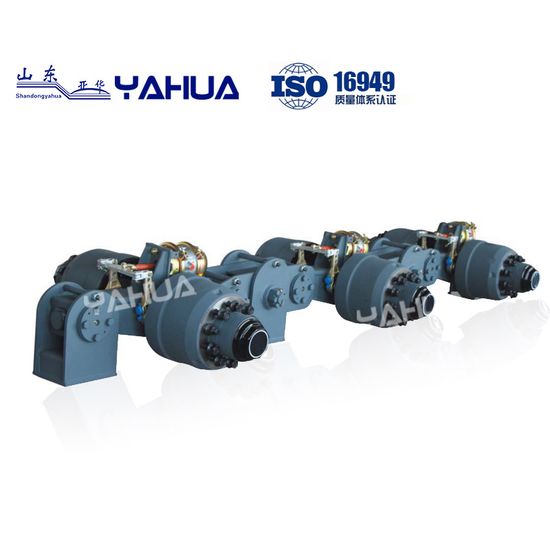


Buyers must prioritize Load Capacity and Material Grade. Ensure the leaf springs or air bags are rated for the specific Gross Vehicle Weight Rating (GVWR) of the target trucks. For mechanical suspensions, look for high-strength spring steel (e.g., 60Si2Mn or 50CrV). For air suspensions, verify the bellows material durability and the precision of the leveling valves. Additionally, check for anti-corrosion treatments like electrophoresis or powder coating, which are essential for longevity in harsh environments.
Suppliers must hold IATF 16949:2016 certification, which is the global quality management standard for the automotive industry. Products should also meet ISO 9001 standards. Depending on the destination market, look for compliance with DOT (Department of Transportation) standards for the US or E-Mark (ECE R13/R55) for the European Union to ensure the components meet safety and performance benchmarks for heavy-duty road use.
Request Fatigue Test Reports showing the component can withstand at least 500,000 to 1,000,000 cycles under full load. Ask for Salt Spray Test results (minimum 240-480 hours) to verify rust resistance. For air suspensions, a burst pressure test report is critical. It is highly recommended to order a sample for fitment testing and metallurgical analysis to confirm the steel grade matches the technical data sheet.
Identify if the need is for Off-road/Construction (Mechanical Bogie Suspension) or Long-haul Logistics (Air Suspension). The industry is shifting towards lightweight designs using composite materials or high-tensile steel to increase payload capacity. Maintenance-free bushings and integrated axle-suspension systems are also key technologies that reduce the Total Cost of Ownership (TCO) for fleet operators.
Always conduct factory audits or hire third-party inspection services like SGS or Intertek to verify the production line. Use Made-in-China.com's Secured Trading services to ensure payment is only released upon confirmation of quality. Avoid deals that are significantly below market price, as these often indicate the use of recycled steel or inferior casting methods.
Focus on Warranty Terms rather than just the unit price; a standard 12 to 24-month warranty is a sign of supplier confidence. Negotiate tiered pricing based on annual volume rather than single orders. For customized OEM parts, ensure the molding fee and intellectual property rights are clearly defined in the contract to prevent your designs from being sold to competitors.
Suspension parts are extremely heavy and dense; therefore, Sea Freight (LCL or FCL) is the only economically feasible method. Ensure the supplier uses heavy-duty wooden crates or steel pallets with proper bracing to prevent shifting during transit. Request VCI (Volatile Corrosion Inhibitor) packaging to prevent moisture damage and rusting during long ocean voyages.
Verify the HS Code (typically 8708.80) to calculate accurate import duties and anti-dumping taxes, which can be high for steel products in certain regions. Ensure all Commercial Invoices and Packing Lists explicitly state the material composition and application to avoid customs delays. For large-scale procurement, consider FOB (Free On Board) terms to maintain better control over your shipping costs and insurance.