
Satisfies 1 requirement
Mobile Shipping Container Toilet Portable Toilets for Sale
US$12,650.00
1 Piece(MOQ)

I have found results from90000+products and30000+suppliers aboutMobile toilet container


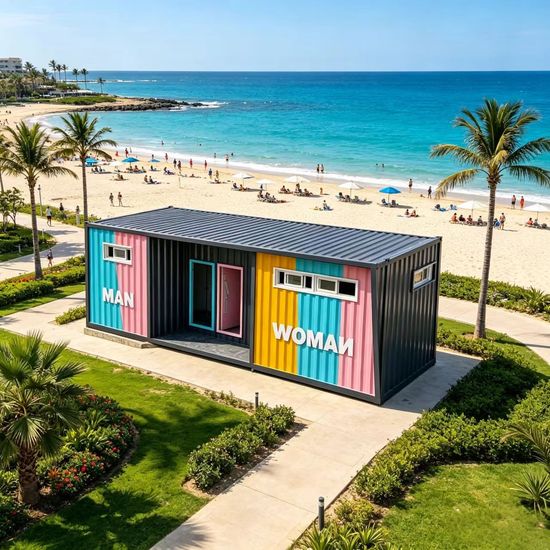


When sourcing mobile toilet containers, prioritize the structural integrity of the galvanized steel frame to ensure corrosion resistance. The wall panels should ideally be 50mm to 75mm EPS or Rockwool sandwich panels for superior thermal and acoustic insulation. For flooring, ensure the use of anti-slip aluminum plates or fiber cement boards with PVC coating to handle high moisture environments. Additionally, verify that the plumbing system uses high-quality PPR or PVC pipes that meet international pressure standards to prevent leaks.
Buyers must ensure the product complies with regional building and safety codes. Look for ISO 9001 certification for manufacturing quality management and CE marking for European market access. For the electrical systems (lighting, exhaust fans, sockets), ensure components are UL listed (for the US) or SAA certified (for Australia). It is also critical to verify that the waste management system aligns with local environmental protection regulations regarding sewage discharge or containment.
Mobile toilet containers are designed for construction sites, outdoor events, disaster relief, and public parks. For high-traffic areas, specify heavy-duty stainless steel sanitary ware (toilets and sinks) rather than ceramic to prevent breakage during transport or frequent use. Ensure the unit includes a high-efficiency exhaust system to maintain air quality. For extreme climates, request reinforced insulation and integrated HVAC systems to ensure user comfort in temperatures ranging from -20°C to 45°C.
A competent supplier on Made-in-China.com should offer modular design flexibility, allowing for combinations of toilets, urinals, showers, and disabled-accessible (ADA compliant) cubicles. You should be able to request custom external aesthetics (such as wood-grain cladding or specific paint colors) to match the surrounding environment. Furthermore, ask for integrated water tanks and waste tanks if the deployment site lacks direct access to municipal water and sewage lines.
The main risks include shipping damage and non-compliance with local plumbing codes. To mitigate these, require the supplier to provide a pre-shipment inspection (PSI) report and detailed photos of the internal bracing used for transport. Ensure the loading plan maximizes container space (e.g., shipping as Flat-Pack/SOC or fully assembled) to reduce freight costs, which can account for a significant portion of the total landed cost.
Utilize secured payment terms and prioritize suppliers with a high 'Audit Reports' status on Made-in-China.com. Negotiate a payment structure such as 30% deposit and 70% balance against the Bill of Lading (B/L) after third-party inspection. Clearly define the warranty period (typically 1-3 years for the structure) and ensure the supplier provides a clear manual for on-site assembly if the units are shipped in knock-down (CKD) format.
Since these are bulky items, Sea Freight is the most economical method. For remote sites, confirm if the supplier can handle DDP (Delivered Duty Paid) terms, or ensure your local agent can manage the heavy-lift crane requirements for offloading at the destination. Be aware of anti-dumping duties or specific import tariffs on steel structures in your country, and request the correct HS Code (typically 940690) to ensure accurate customs declaration.