
Satisfies 1 requirement
It Can Pull Two 20-Foot or 40-Foot Container Flatbed Semi-Trailers
US$9,500.00-25,000.00
1 Piece(MOQ)

I have found results from30000+products and10000+suppliers aboutPull trailer


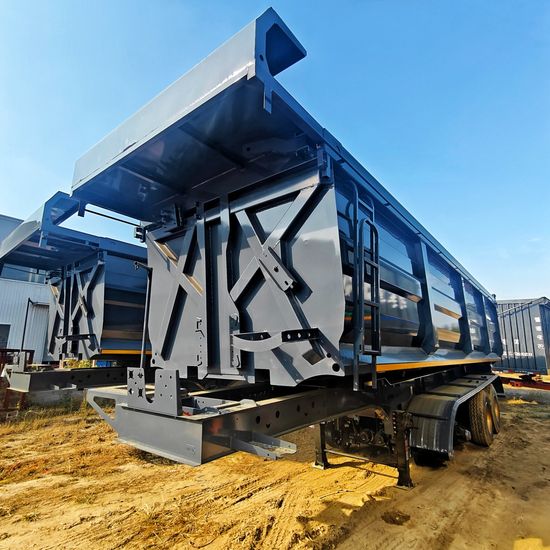


When sourcing pull trailers, the most critical factor is the Gross Vehicle Weight Rating (GVWR), which must exceed your maximum intended load. You should prioritize trailers with hot-dip galvanized steel frames for superior corrosion resistance, especially for cross-border maritime transport. Ensure the axle system (torsion vs. spring) matches your terrain requirements, and verify that welding points follow international standards like ISO 3834 to prevent structural failure under stress.
Compliance is non-negotiable for road-legal equipment. For the US market, ensure the trailer meets DOT (Department of Transportation) and NATM (National Association of Trailer Manufacturers) standards. For the EU, look for CE marking and e-Mark certification for lighting and braking systems. Always request the Certificate of Conformity (CoC) and the 17-digit VIN (Vehicle Identification Number) to ensure the vehicle can be registered in the destination country.
Look for trailers equipped with electric or hydraulic surge brakes if the load exceeds 1,500kg. Safety features should include breakaway kits, LED waterproof lighting systems, and heavy-duty safety chains. For specialized use, such as car haulers or utility trailers, ensure the loading ramps are reinforced and the tie-down points (D-rings) are rated for at least 1.5 times the cargo weight.
Calculate the Total Cost of Ownership (TCO) by factoring in the unit price, ocean freight (often high due to volume), and import duties. To optimize costs, consider SKD (Semi-Knocked Down) or CKD (Completely Knocked Down) shipping options, which allow more units to fit into a 40HQ container, potentially reducing shipping costs by 30-50%. However, ensure you have the local technical capacity to perform the final assembly.
The biggest risks include structural damage during transit and non-compliance with local road laws. To mitigate this, use professional third-party inspection services (like SGS or Intertek) to conduct a Pre-Shipment Inspection (PSI) focusing on weld quality and brake testing. Ensure the supplier uses heavy-duty lashing and anti-rust coating for sea freight to prevent saltwater corrosion.
Focus on long-term partnership incentives rather than just the lowest price. Request a detailed Bill of Materials (BOM) to see the brand of axles and tires used (e.g., Dexter or AL-KO). Negotiate for spare parts kits (bearings, seals, and lights) to be included in the initial order, and insist on a warranty period of at least 12-24 months on the main chassis.
Always utilize Secured Trading Services provided by Made-in-China.com to protect your payment. Use a 30% deposit and 70% balance payment structure, where the balance is paid only after receiving the Bill of Lading (B/L) and a successful third-party inspection report. Avoid direct wire transfers to private accounts; always use verified corporate accounts.
For large or non-stackable trailers, Ro-Ro (Roll-on/Roll-off) shipping is the safest method to prevent lifting damage. For smaller utility trailers, containerization is more cost-effective. If shipping to landlocked regions, ensure the freight forwarder has experience with multimodal transport and understands the specific oversize load permits required for inland haulage.