
Satisfies 1 requirement
Oil Seal 13b0887 Rear Axle Oil Seal for Liugong Clg856 Wheel Loader Oil Seal Parts 13b0887
US$1.00
1 Piece(MOQ)

I have found results from50000+products and20000+suppliers aboutRear axle oil seal


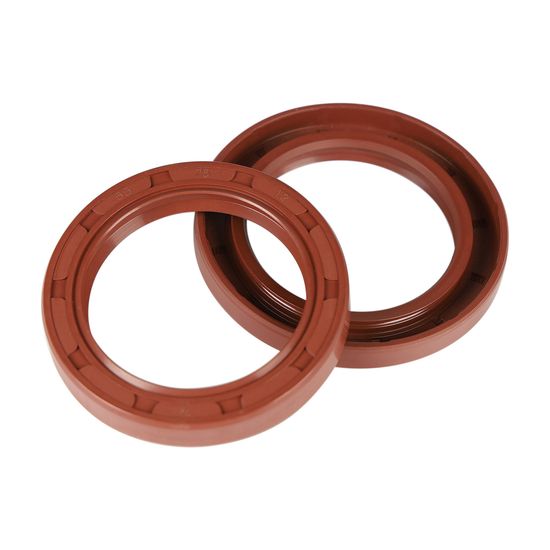


The material choice is critical for durability. For standard automotive use, Nitrile Rubber (NBR) is common due to its oil resistance. However, for high-temperature or heavy-duty applications, you should prioritize Fluororubber (FKM/Viton) or Polyacrylate (ACM), which offer superior heat resistance and chemical stability. Ensure the internal tension spring is made of stainless steel to prevent corrosion and maintain a tight seal over time.
You must confirm the exact dimensions (Inner Diameter x Outer Diameter x Width) and the seal type (e.g., TC, TB, SB). Request the supplier to provide radial lip load test reports and bench test data showing the seal can withstand the specific RPM (Rotational Speed) and pressure of your target vehicle models. For heavy-duty trucks, look for multi-lip designs that provide extra protection against external dust and contaminants.
As a B2B buyer, you should only source from manufacturers holding IATF 16949 certification, which is the global quality management standard for the automotive industry. Additionally, ensure the products comply with ISO 6194 for rotary shaft lip-type seals. Requesting a PPAP (Production Part Approval Process) report is highly recommended for bulk procurement to ensure consistent manufacturing quality.
Rear axle oil seals are primarily used to prevent gear oil leakage and protect the axle assembly from dirt and water ingress. In commercial fleets, they are critical for preventing differential failure. Maintenance-wise, these are 'replace-on-failure' or 'preventative' items; however, you should advise end-users to check for weeping or dampness during every oil change. High-quality seals should have a service life exceeding 100,000 kilometers under normal driving conditions.
The most effective strategy is to request material infrared spectroscopy reports to verify the rubber compound. On Made-in-China.com, prioritize Audited Suppliers who have undergone third-party verification by SGS or TÜV Rheinland. Always order samples and perform a 'stretch test' and 'oil immersion test' before releasing the final payment for a bulk order.
For automotive components, pricing is highly sensitive to raw material costs (rubber and steel). Negotiate based on annual volume rather than a single order to secure a 10-15% discount. If you are a startup, look for suppliers offering flexible MOQs (e.g., 100-500 pieces) by choosing 'standard sizes' that the factory already has in continuous production.
Oil seals are sensitive to deformation and UV light. Ensure the contract specifies individual anti-rust paper or plastic packaging and that they are packed in sturdy, moisture-proof corrugated boxes. For international shipping, use palletized loads to prevent crushing. Avoid long-term storage in non-climate-controlled warehouses, as extreme heat can cause the rubber to age and harden before it even reaches the customer.
Utilize Secured Trading services on Made-in-China.com to ensure your payment is only released after the goods pass inspection. Regarding trade policies, verify the HS Code (typically 401693) to calculate accurate import duties and check for any anti-dumping duties applicable to rubber products in your specific country (e.g., USA or EU markets).