
Satisfies 1 requirement
Stainless Steel Coil Price High Quality Customized 304 304L 316 316L
US$510.00-580.00
5 Tons(MOQ)

I have found results from30000+products and10000+suppliers aboutStainless steel coil price


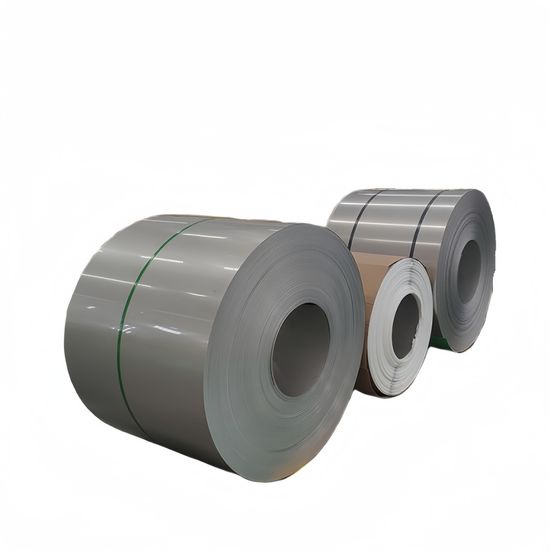


When sourcing stainless steel coils, the material grade (e.g., 304, 316, 430) is the primary determinant of performance. You must verify the chemical composition, specifically the Nickel and Chromium content, as these dictate corrosion resistance. Always request a Mill Test Certificate (MTC) to ensure the product meets international standards like ASTM, AISI, or JIS. Additionally, inspect the surface finish (2B, BA, No. 4, or Mirror) to ensure it matches your specific application requirements.
The price is heavily influenced by thickness tolerance, width precision, and edge type (Slit or Mill edge). Coils with tighter tolerances or specialized heat treatments (like Bright Annealing) will command a premium. Furthermore, the coil weight (ID/OD dimensions) should be compatible with your processing machinery to avoid additional handling or decoiling costs. High-precision cold-rolled coils are generally more expensive than hot-rolled variants due to the additional processing steps involved.
For industrial and construction use, ensure the supplier complies with ISO 9001:2015 for quality management. If the coils are intended for pressure vessels or structural use in the EU, CE marking and PED (Pressure Equipment Directive) certification are mandatory. For North American markets, adherence to ASTM A240/A480 is the industry benchmark. Buyers should also confirm RoHS and REACH compliance if the steel will be used in electronics or consumer goods.
To maximize value, monitor the LME (London Metal Exchange) nickel prices, as stainless steel surcharges fluctuate based on raw material costs. Purchasing in full container loads (FCL) significantly reduces per-ton shipping costs. Additionally, look for suppliers on Made-in-China.com who offer volume-based discounts; typically, orders exceeding 20-50 tons allow for better price negotiation. Consider the Total Cost of Ownership (TCO), including anti-rust packaging and port-to-factory logistics.
The most significant risks include material substitution (e.g., receiving 201 grade instead of 304) and weight discrepancies. To mitigate this, use Third-Party Inspection services (like SGS or Bureau Veritas) to conduct pre-shipment testing and container loading supervision. Ensure the Bill of Lading (B/L) weight matches the packing list and the physical scale readings at the port.
For new suppliers, avoid 100% upfront payments. A standard secure practice is 30% T/T deposit and 70% against the copy of the Bill of Lading, or using a Letter of Credit (L/C) at sight for large-scale industrial orders. Utilizing the secured payment services on Made-in-China.com provides an additional layer of protection, ensuring funds are only released upon confirmed receipt of goods.
Stainless steel is susceptible to sea salt corrosion and physical deformation during transit. Insist on seaworthy packaging, which includes waterproof paper, metal strapping, and wooden pallets or cradles to prevent the coil from shifting. Specify horizontal (Eye to Sky) or vertical (Eye to Wall) loading based on your unloading equipment. Ensure the shipping contract includes marine insurance covering 'All Risks' to protect against damage during heavy seas.
Buyers must stay informed about Anti-Dumping Duties (ADD) and Countervailing Duties (CVD) imposed by their home country on steel imports from specific regions. Check the HS Code (typically starting with 7219 or 7220) against your local customs tariff schedule. Working with experienced exporters on Made-in-China.com can help you navigate Certificate of Origin requirements, which may be necessary to claim preferential tariff rates under Free Trade Agreements.