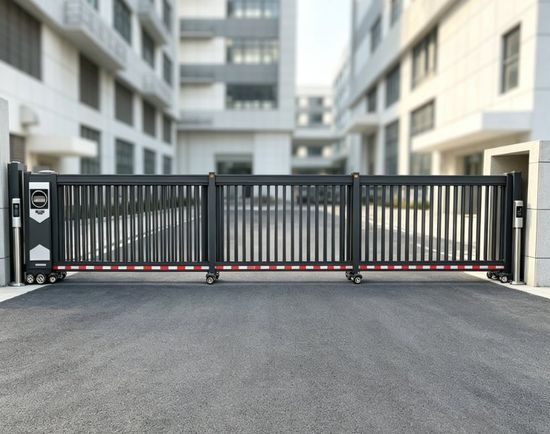
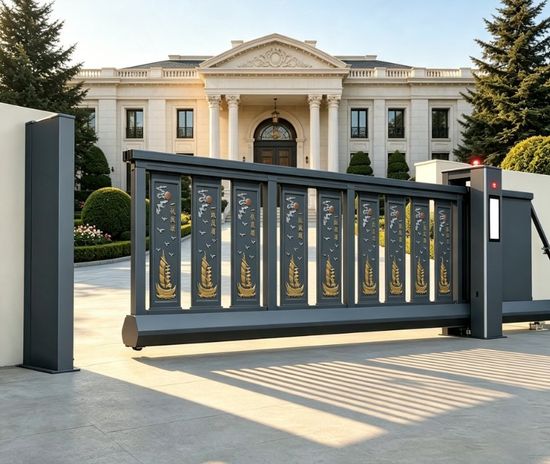
Container gate manufacturers
I have found results from400+products and200+suppliers aboutContainer gate
Wide Temperature Brushless Barrier Gate for Commercial Street Parking, Container Dock and Office Tower Access
US$180.00-215.00
10 Sets(MOQ)
Sample AvailableStepless Speed Brushless Barrier Gate for Factory Main Gate, Parking Entrance and Container Terminal
US$270.00-445.00
1 Set(MOQ)
Sample AvailableBarrier Gate with Independent Deceleration Angle Adjustable Function for School Entrance and Logistics Container Terminal
US$818.00-895.00
1 Set(MOQ)
Sample AvailableLearning Code Remote Control Barrier Gate for Factory Gate, Public Park, School and Container Port Terminal
US$200.00-220.00
10 Sets(MOQ)
Sample AvailableStepless Adjustable Speed Vehicle Barrier Gate RS485 Connectable for Office Tower, Factory Gate & Container Terminal
US$200.00-220.00
10 Sets(MOQ)
Sample AvailableTraffic Light Interlock Barrier Gate for Shopping Mall Parking, Industrial Yard, Public Park and Container Port
US$180.00-215.00
10 Sets(MOQ)
Sample AvailableStepless Speed Boom Barrier Gate with RS485 Interface for Factory Yard, Public Park and Container Terminal
US$200.00-220.00
10 Sets(MOQ)
Sample Available50 Groups Learning Code Remote Control Barrier Gate for Factory Main Gate, Scenic Park, School and Container Terminal
US$240.00-375.00
1 Set(MOQ)
Sample AvailableRS485 Communication Smart Barrier Gate with Remote Mini-Program Control for Campus, Downtown Street & Container Port
US$180.00-215.00
10 Sets(MOQ)
Sample AvailableDual Control Mode Barrier Gate (Remote + PC Mini Program) for Campus Parking, Downtown Mall & Container Terminal
US$240.00-375.00
1 Set(MOQ)
Sample AvailableBarrier Gate with Separate 3s Slow Speed Core Option for School Parking, High-Rise Building and Container Port
US$200.00-220.00
10 Sets(MOQ)
Sample Available Sourcing guidance for Container Gate
What are the key technical specifications to consider when selecting a Container Gate?
When sourcing container gates, the primary focus should be on structural integrity and material grade. Ensure the gate is constructed from Corten steel (SPA-H) or high-grade galvanized steel to prevent atmospheric corrosion. Key specs include door panel thickness (typically 1.6mm to 2.0mm), the quality of the locking bar assembly (high-tensile steel), and the use of EPDM rubber gaskets for a 100% watertight seal. For security, prioritize gates with integrated lock boxes to protect padlocks from bolt cutters.
Which international standards and compliance certifications are mandatory for Container Gates?
For gates intended for shipping containers used in international logistics, compliance with ISO 1496 and ISO 668 is essential to ensure dimensional compatibility. If the gate is for a modified container (e.g., office or storage), verify CSC (International Convention for Safe Containers) certification if the unit will be stacked. Additionally, ensure the welding process meets AWS D1.1 or ISO 3834 standards to guarantee joint durability under heavy vibration during transport.
How can I evaluate the performance and durability of a Container Gate supplier's product?
Request a Salt Spray Test report (ASTM B117) to verify the anti-corrosion performance of the paint system, which should ideally be a marine-grade zinc-rich primer and epoxy topcoat. Ask for a cycle test report on the hinges and locking bars; high-quality gates should withstand over 5,000 opening/closing cycles without deformation. For cold-chain or specialized storage, confirm the thermal bridge insulation properties of the gate frame.
What are the typical usage scenarios and functional requirements for different types of Container Gates?
Usage scenarios dictate the design: Standard End Doors are for logistics and require maximum security; Side-Opening Gates are for easy pallet loading and require reinforced headers to prevent sagging. For Container Conversions (offices/shops), functional requirements shift toward ease of operation, where lightweight aluminum or glass-integrated gates might be preferred over heavy industrial steel, provided they maintain weatherproofing standards.
Cross-Border Procurement Risks and Strategic Advice
What are the common risks in cross-border purchasing of Container Gates and how to mitigate them?
The biggest risk is dimensional mismatch and warping during welding, which prevents the gate from sealing correctly. Mitigate this by requiring a pre-shipment inspection (PSI) using a 'Go/No-Go' gauge for the locking cams. Another risk is rusting during sea transit; ensure the supplier uses VCI (Volatile Corrosion Inhibitor) packaging or heavy-duty shrink wrap to protect raw steel components from salty sea air.
What strategies should be used when negotiating with suppliers on Made-in-China.com?
Focus on Total Cost of Ownership (TCO) rather than just the unit price. Negotiate for spare parts inclusion, such as extra gaskets and hinge pins, which are low-cost for the supplier but expensive to source locally. For large orders, request a staggered payment schedule linked to production milestones (e.g., 30% deposit, 40% after welding inspection, 30% after loading) to maintain leverage over quality.
How can I ensure transaction security and alignment with international trade policies?
Always use Secured Trading Services provided by Made-in-China.com to protect your payments. Ensure the Incoterms (e.g., FOB or CIF) are clearly defined in the Proforma Invoice to avoid hidden port charges. Verify the supplier's Export License and check if the product falls under specific anti-dumping duties in your country (e.g., certain steel structures in the EU or US) to avoid unexpected customs costs.
What are the best practices for shipping heavy Container Gates to international destinations?
Since container gates are heavy and flat, they are best shipped palletized in 'kits' to maximize container space. Ensure the supplier uses steel strapping and edge protectors to prevent the gates from scratching each other, which leads to localized rusting. For small batches, consider LCL (Less than Container Load), but ensure the crate is ISPM 15 certified heat-treated wood to pass international quarantine regulations.