
Satisfies 1 requirement
2 Inch-10inch PVC Spiral Flexible Reinforced Irrigation Water Sand Suction Discharge Hose Pipe
US$0.10-2.60
300 Meters(MOQ)

20000+ products and 8000+ suppliers results


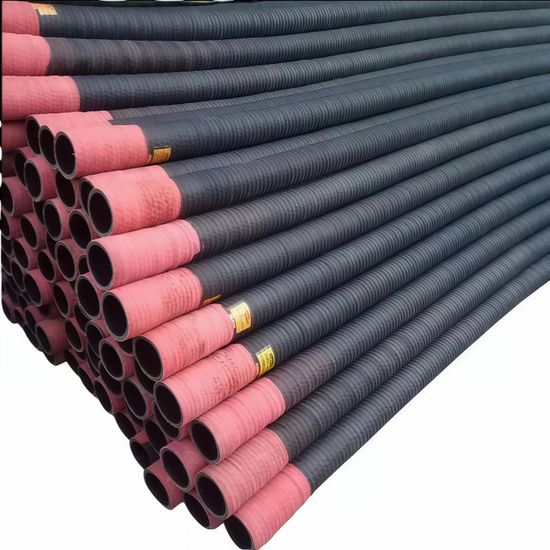


The most critical factor is the inner tube material, which must be made of high-abrasion-resistant natural or synthetic rubber (such as NR, SBR, or BR) to withstand the constant friction of sand and gravel. You should look for a specific gravity/density that balances flexibility with durability. Additionally, the reinforcement layer should consist of high-tensile textile cords or steel wires to prevent collapsing under high vacuum pressure. Ensure the working pressure (WP) and burst pressure (BP) meet your operational safety margins, typically a 3:1 or 4:1 safety factor.
Abrasion resistance is usually measured by volume loss in cubic millimeters (mm³) according to DIN 53516 or ISO 4649 standards. For heavy-duty sand suction, look for a value below 60-80mm³; the lower the number, the better the wear resistance. If you are handling sharp silica sand or larger aggregates, a thicker inner rubber lining (typically 6mm to 15mm) is required to extend the service life of the hose.
Suppliers should provide certification for ISO 9001:2015 for quality management. For specific performance, ensure the hose complies with ISO 3861 (Rubber hoses for sand and grit blasting). If the hose is used in marine environments for dredging, it should meet PIANC standards. Always request a Pressure Test Report and a Material Composition Analysis to verify the rubber's durability.
These hoses are primarily used in dredging, sand mining, construction site dewatering, and port maintenance. Regarding connections, you should specify whether you need built-in rubber flanges, steel flanges (fixed or swivel), or quick-release couplings. For high-suction environments, full-vacuum rated hoses with integrated steel wire helixes are mandatory to prevent the hose from flattening.
Request a pre-shipment inspection (PSI) by a third-party agency like SGS or Intertek. Specifically, ask for a Shore A Hardness test and a hydrostatic pressure test on the actual production batch. Avoid suppliers who cannot provide a Material Safety Data Sheet (MSDS) or those who offer prices significantly below the market rate for raw rubber, as they may be using excessive recycled rubber fillers, which drastically reduce hose lifespan.
Focus on Total Cost of Ownership (TCO) rather than just the unit price. Negotiate based on service life guarantees (e.g., number of cubic meters of sand processed). For large orders, use Made-in-China.com's Secured Trading services to ensure payment is only released upon verification of shipping documents. Ask for tiered pricing based on annual volume to secure long-term discounts.
Sand suction hoses are bulky and heavy. Ensure the supplier uses proper seaworthy packaging, such as heavy-duty plastic film wrapping or wooden crates to prevent UV degradation and physical damage during transit. Because these items are often non-stackable, clarify the CBM (Cubic Meter) calculations early to avoid unexpected freight surcharges. For long hoses, confirm the minimum bending radius to ensure they can fit into standard shipping containers without permanent deformation.
Verify the supplier's Business License and Export Qualification on the Made-in-China.com platform. Ensure the Harmonized System (HS) Code (typically 4009 for rubber hoses) is correctly declared to avoid customs delays or incorrect duty applications. Always use Incoterms 2020 (such as FOB or CIF) clearly in the contract to define the point of risk transfer.